Article
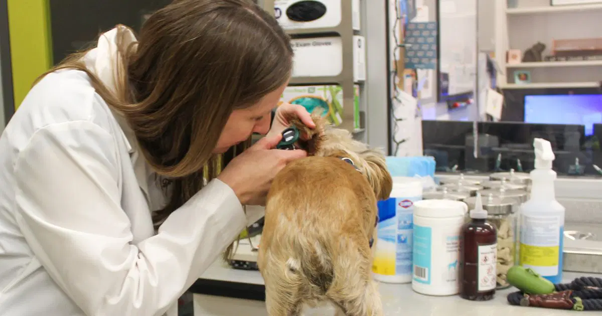
Is Every Ear Infection Really an Infection? Understanding Dysbiosis in Canine Otitis
For years, canine otitis has been approached with a simple question:
"Which bacteria or yeast is causing the infection?"
Emerging research suggests we may need to ask a different question:
"Has the ear microbiome lost its balance?"
This shift in thinking could explain why some chronic otitis cases keep recurring despite appropriate antimicrobial therapy.
Healthy Ears Aren't Sterile
A normal canine ear isn't free of microorganisms. Instead, it's home to a diverse community of bacteria and fungi that coexist without causing disease1,2.
This balanced microbial ecosystem—known as the ear microbiome—helps maintain ear health.
Problems arise when this balance is disrupted, a condition known as dysbiosis.
Diversity Matters More Than You Think
Studies using genomic sequencing have shown that healthy ears contain a wide variety of bacterial groups, including1:
- Proteobacteria
- Actinobacteria
- Firmicutes
- Fusobacteria
- Bacteroidetes
This diversity appears to protect the ear canal by preventing any single organism from becoming dominant.
In dogs with otitis, that diversity decreases dramatically.
Instead of a balanced microbial community, the ear often becomes dominated by1:
- Malassezia pachydermatis
- Staphylococcus pseudintermedius
- Pseudomonas aeruginosa
These organisms may not simply "infect" the ear—they often take over because the normal microbiome has already been disrupted.
Chronic Otitis Is More Than an Antimicrobial Problem
When one organism dominates the ear canal, it creates a vicious cycle.
The dominant microbes1,2:
- Outcompete beneficial organisms
- Trigger inflammation
- Damage the skin barrier
- Encourage further microbial overgrowth
This may explain why repeated antibiotic courses sometimes provide only temporary improvement.
Treating the dominant pathogen without restoring the ear's healthy environment may leave the patient vulnerable to relapse.
The Clinical Takeaway
When managing chronic or recurrent otitis, think beyond pathogen elimination.
Ask yourself:
- Has the underlying allergy been controlled?
- Is excessive moisture still present?
- Is inflammation disrupting the microbiome?
- Am I treating the disease or just suppressing the current overgrowth?
The goal should be restoring a healthy ear ecosystem—not simply achieving a negative culture.
Reference
- Nuttall T. Managing recurrent otitis externa in dogs: what have we learned and what can we do better?. Journal of the American Veterinary Medical Association. 2023 Jun 1;261(S1):S10-22. https://www.pure.ed.ac.uk/ws/portalfiles/portal/332390919/JAVMA_otitis_review_2022_unformatted_version_2.pdf
- Tang S, Prem A, Tjokrosurjo J, Sary M, Van Bel MA, Rodrigues-Hoffmann A, Kavanagh M, Wu G, Van Eden ME, Krumbeck JA. The canine skin and ear microbiome: A comprehensive survey of pathogens implicated in canine skin and ear infections using a novel next-generation-sequencing-based assay. Veterinary microbiology. 2020 Aug 1;247:108764. https://www.sciencedirect.com/science/article/pii/S037811351931493
Related Contents
.jpg)
Video
Transjugular Removal of Canine Heartworms: A Clinical and Surgical Overview
Transjugular removal of canine heartworms is a specialized intervention used in selected dogs with s...

Article
Feline Pregnancy Endocrinology: Hormonal Changes and Placental Function
Pregnancy in cats involves a distinctive endocrine pattern in which ovarian and placental hormones w...

Article
Hormonal Control of Pregnancy Termination in Cats
Pregnancy maintenance in cats depends strongly on coordinated hormonal support, particularly progest...

Article
Feline Embryo Implantation and Early Placental Development
Pregnancy establishment in cats involves a sequence of precisely timed events between fertilization,...

Article
Ultrasonographic Monitoring of Pregnancy in Cats: A Gestational Timeline
Ultrasonography provides a practical way to follow the progression of feline pregnancy by identifyin...

Article
Feline Mismating: Pregnancy Diagnosis and Clinical Management
Mismating or unplanned mating is a common clinical problem in sexually mature queen cats because of...

Article
Medical Termination of Pregnancy in Queens: Drugs, Timing and Treatment Protocols
Medical termination of pregnancy (MTP) in queen cats should be approached according to the timing of...
Article
Safety and Aftercare Following Pregnancy Termination in Queen Cats
Pregnancy termination in queen cats requires more than selecting an appropriate abortifacient. Once...