Article
Beyond the Skin: Why Iron Status Deserves Attention in Canine Atopic Dermatitis
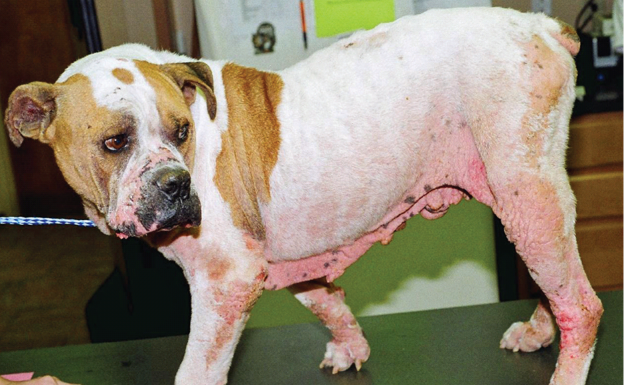
Canine atopic dermatitis (CAD) is often viewed as a disease of the skin, characterised by chronic itching, recurrent infections, and a compromised skin barrier. However, the inflammatory processes driving CAD extend well beyond the skin. Increasingly, evidence suggests that chronic inflammation may also influence nutritional status, particularly iron metabolism, creating changes that are not immediately apparent on routine blood work.¹
For veterinarians, this raises an important question: Could a dog with well-managed atopic dermatitis still have underlying iron depletion despite appearing non-anemic?
Iron Deficiency Can Exist Before Anemia
Iron deficiency is commonly associated with low hemoglobin and overt anemia, but depletion of iron stores begins much earlier. During the early stages, the body maintains red blood cell production by utilising stored iron, allowing hemoglobin concentrations to remain within the reference range. As a result, conventional screening may overlook developing iron deficiency1,2.
This distinction is particularly important in dogs with chronic inflammatory diseases. Persistent inflammation alters iron absorption and distribution, reducing the amount of biologically available iron even when dietary intake is adequate. Consequently, iron availability to tissues may decline long before classical anemia develops.¹
When Chronic Inflammation Alters Iron Metabolism
Dogs are typically fed meat-based diets that provide sufficient dietary iron. Yet adequate intake does not always translate into adequate utilisation.
Inflammation affects iron homeostasis through multiple mechanisms. Reduced intestinal absorption, altered iron recycling, and sequestration of iron within storage proteins limit its availability for essential cellular functions. Over time, depleted iron stores can coexist with ongoing inflammation, making iron deficiency difficult to recognise using routine laboratory parameters alone1,3.
This explains why chronic inflammatory diseases such as CAD should not be viewed solely through a dermatological lens. They also have systemic metabolic consequences that may influence patient health and recovery.
Looking Beyond Hemoglobin
A normal hemoglobin concentration does not necessarily exclude iron deficiency.
Subtle changes in red blood cell indices, including reductions in mean corpuscular volume (MCV), mean corpuscular hemoglobin (MCH), and mean corpuscular hemoglobin concentration (MCHC), may indicate declining iron availability before anemia becomes clinically evident1.
Similarly, inflammatory biomarkers can provide additional context. Elevated C-reactive protein (CRP) and total protein concentrations, together with reduced albumin levels, may reflect persistent low-grade inflammation that contributes to altered iron metabolism. Evaluating these parameters collectively provides a more comprehensive picture than interpreting any single marker in isolation1.
Why Serum Iron Alone Isn't Enough
Serum iron is often assumed to reflect iron status, but its interpretation requires caution.
Iron concentrations fluctuate throughout the day and can be influenced by recent feeding, sample handling, mild hemolysis, and medications such as glucocorticoids or other immunomodulatory therapies1. Relying solely on serum iron may therefore underestimate—or occasionally overestimate—the patient's true iron status.
Instead, clinicians should integrate hematological findings with inflammatory markers and the overall clinical picture, particularly in dogs with chronic dermatological disease.
A More Comprehensive Approach to CAD
Managing CAD extends beyond controlling pruritus and preventing secondary infections. Long-term success also depends on recognising systemic factors that may perpetuate inflammation or delay recovery.
In dogs with chronic or poorly controlled disease, a broader assessment may be warranted, including:
- Evaluation of red blood cell indices alongside routine hematology.
- Assessment of inflammatory markers such as CRP and albumin where available.
- Consideration of nutritional status in dogs with persistent or recurrent clinical signs.
- Interpretation of laboratory findings within the context of chronic inflammatory disease rather than relying on individual parameters alone.
Such an approach may help identify subtle metabolic changes before they progress to clinically significant deficiencies.
The Clinical Take-Home
Canine atopic dermatitis is more than a skin disorder—it is a chronic inflammatory condition with systemic effects. Persistent inflammation can alter iron metabolism, allowing iron depletion to develop even in well-nourished dogs and before anemia becomes evident. Recognising these early changes encourages a more holistic approach to patient management, where nutritional status, inflammatory biomarkers, and hematological trends complement dermatological assessment.
As our understanding of CAD continues to evolve, looking beyond visible skin lesions may help veterinarians optimise long-term care, improve overall patient health, and identify hidden contributors to persistent disease.
Reference (Vancouver)
- Ramos CF, Doulidis PG, Polakova N, Burgener IA, Jensen-Jarolim E, Cimarelli G, Panakova L, Roth-Walter F. Iron deficiency in dogs suffering from atopic dermatitis. BMC Veterinary Research. 2024 Nov 6;20(1):506. https://link.springer.com/content/pdf/10.1186/s12917-024-04350-y.pdf
- Nayak S. Haematological and electrolyte profile of dogs suffering from chronic dermatitis. MV Sc thesis. 2018. https://krishikosh.egranth.ac.in/server/api/core/bitstreams/2193400c-0a9c-41bf-8e31-d74cdd699109/content
- Ramos CF. Assessing iron parameters in healthy non-atopic dogs and dogs with atopic dermatitis. https://phaidra.vetmeduni.ac.at/api/object/o:3383/get
Related Contents

Upcoming Event
African Swine Fever: Diagnosis and Management
African swine fever can cause severe disease and significant losses in affected pig populations.&nbs...
.jpg)
Video
Transjugular Removal of Canine Heartworms: A Clinical and Surgical Overview
Transjugular removal of canine heartworms is a specialized intervention used in selected dogs with s...

Article
Feline Pregnancy Endocrinology: Hormonal Changes and Placental Function
Pregnancy in cats involves a distinctive endocrine pattern in which ovarian and placental hormones w...

Article
Hormonal Control of Pregnancy Termination in Cats
Pregnancy maintenance in cats depends strongly on coordinated hormonal support, particularly progest...

Article
Feline Embryo Implantation and Early Placental Development
Pregnancy establishment in cats involves a sequence of precisely timed events between fertilization,...

Article
Ultrasonographic Monitoring of Pregnancy in Cats: A Gestational Timeline
Ultrasonography provides a practical way to follow the progression of feline pregnancy by identifyin...

Article
Feline Mismating: Pregnancy Diagnosis and Clinical Management
Mismating or unplanned mating is a common clinical problem in sexually mature queen cats because of...

Article
Medical Termination of Pregnancy in Queens: Drugs, Timing and Treatment Protocols
Medical termination of pregnancy (MTP) in queen cats should be approached according to the timing of...