Article
Can Laser Therapy Improve Healing in Chronic Turtle Shell Disease?
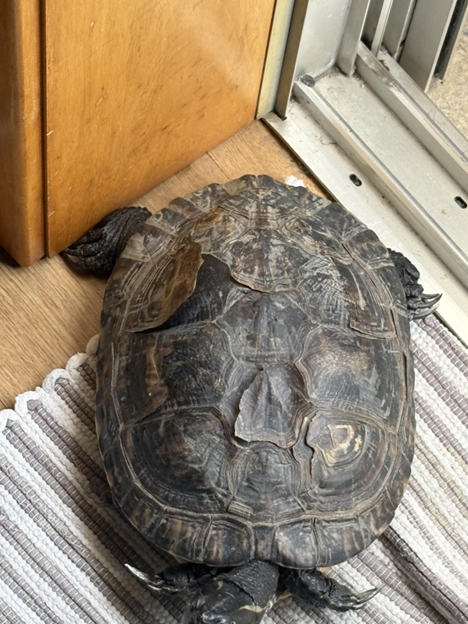
Chronic shell lesions in turtles are among the most time-consuming and frustrating conditions veterinarians manage in reptile practice. Healing may take months or even years, particularly in aquatic species where wounds remain constantly exposed to environmental microorganisms.
Rosskopf and Woerpel described shell healing periods of several months in chelonians, while Mitchell and Diaz-Figueroa reported recovery timelines extending up to 30 months in some cases. McArthur and Hernandez-Divers also documented cases requiring one to two years for complete recovery1.
Softshell turtles present an even greater challenge because their shell anatomy differs dramatically from other chelonians. Instead of thick keratinized scutes, they possess thin bony structures covered by leathery skin, making deeper tissue invasion more likely once infection develops1.
Why Stress Slows Recovery in Aquatic Turtles1
Treating aquatic turtles creates a difficult clinical balancing act. Dry docking may reduce contamination and improve wound care, but prolonged removal from water can create significant stress-related complications.
Behavioral changes, reduced feeding, and delayed recovery are common during lengthy treatment regimens. At the same time, aquatic systems themselves continuously expose open wounds to environmental microbial contamination.
Because of these challenges, therapies that accelerate wound healing while minimizing handling stress are becoming increasingly valuable in exotic animal medicine.
How PBM Works
Photobiomodulation (PBM), formerly called low-level laser therapy, is gaining increasing attention in reptile wound management because of its potential to stimulate tissue repair without invasive intervention.
The therapeutic effects of PBM were first recognized when improved wound healing and hair growth were observed following laser exposure in experimental studies1. According to Freitas and Hamblin, PBM works through photochemical interactions within mitochondria, influencing ATP production, nitric oxide activity, calcium signaling, reactive oxygen species, cytokines, and growth factors involved in cellular repair 2.
Additional mechanisms may involve activation of transient receptor potential ion channels associated with histamine-mediated wound healing and antinociceptive effects2.
What Reptile Research Shows
Several studies have demonstrated positive effects of PBM on wound healing, including improved collagen synthesis, enhanced fibroblast activity, increased neovascularization, and reduced inflammation1.
In reptiles, PBM has been explored for traumatic wounds, surgical incisions, exposed organs following shell fractures, and ulcerative dermatitis. Kraut et al. and Pelizzone et al. reported subjective improvements in wound quality and healing rate in chelonians receiving PBM therapy1.
Dose selection appears especially important in reptiles. Cole et al. suggested that lower PBM doses may be insufficient because reptilian integument can reflect or absorb laser light differently than mammalian tissue3. Cusack et al. later reported significantly smaller wounds in iguanas treated with PBM at 10 J/cm² compared to topical therapy alone1.
Bradley also noted that chronic infected wounds may require higher fluence ranges and more aggressive treatment schedules for meaningful clinical improvement1.
Why Exotic Veterinarians Are Interested in PBM
One of PBM’s biggest advantages is practicality. Treatments are typically fast, minimally stressful, and often require no sedation or prolonged restraint. For aquatic turtles already compromised by chronic disease and repeated handling, this becomes a major clinical benefit.
As chronic shell disease continues challenging reptile veterinarians worldwide, PBM is increasingly being viewed as a valuable supportive therapy that may help improve healing outcomes while reducing stress during long-term treatment.
References
- DiRuzzo S, Praschag P, Miller L, Brodsky M. Successful treatment of severe ulcerative dermatitis in an Aubry's Flapshell turtle (Cycloderma aubryi). Journal of Herpetological Medicine and Surgery. 2022 Dec 1;32(4):262-70. https://turtle-island.org/wp-content/uploads/2023/02/DiRuzzo-et-al-Successful-treatment-flapshell-turtle-JHMS-2022.pdf
- De Freitas LF, Hamblin MR. Proposed mechanisms of photobiomodulation or low-level light therapy. IEEE Journal of selected topics in quantum electronics. 2016 Jun 9;22(3):348-64. https://pmc.ncbi.nlm.nih.gov/articles/PMC5215870/pdf/nihms797827.pdf
- Cole GL, Lux CN, Schumacher JP, Seibert RL, Sadler RA, Henderson AL, Newkirk KM. Effect of laser treatment on first-intention incisional wound healing in ball pythons (Python regius). American journal of veterinary research. 2015 Oct 1;76(10):904-12. https://www.academia.edu/download/93193107/ajvr.76.10.904.pdf
Related Contents
.jpg)
Upcoming Event
World Animal Day
World Animal Day highlights the importance of protecting animal health and welfare through responsib...
.jpg)
Video
Transjugular Removal of Canine Heartworms: A Clinical and Surgical Overview
Transjugular removal of canine heartworms is a specialized intervention used in selected dogs with s...

Article
Feline Pregnancy Endocrinology: Hormonal Changes and Placental Function
Pregnancy in cats involves a distinctive endocrine pattern in which ovarian and placental hormones w...

Article
Hormonal Control of Pregnancy Termination in Cats
Pregnancy maintenance in cats depends strongly on coordinated hormonal support, particularly progest...

Article
Feline Embryo Implantation and Early Placental Development
Pregnancy establishment in cats involves a sequence of precisely timed events between fertilization,...

Article
Ultrasonographic Monitoring of Pregnancy in Cats: A Gestational Timeline
Ultrasonography provides a practical way to follow the progression of feline pregnancy by identifyin...

Article
Feline Mismating: Pregnancy Diagnosis and Clinical Management
Mismating or unplanned mating is a common clinical problem in sexually mature queen cats because of...

Article
Medical Termination of Pregnancy in Queens: Drugs, Timing and Treatment Protocols
Medical termination of pregnancy (MTP) in queen cats should be approached according to the timing of...