Article
Selecting the Best Feeding Route in Compromised Ruminants: Oral, Enteral, or Parenteral?
Selecting the most appropriate feeding route is a fundamental component of clinical nutrition in compromised ruminants. The decision extends beyond simply providing nutrients; it should preserve gastrointestinal function, support rumen microbial activity, and meet the patient's nutritional needs while considering the severity of illness and the integrity of the alimentary tract. The route of nutrient delivery should be individualized based on the patient's clinical condition, available resources, and practical feasibility. In many cases, more than one feeding route may be required during the course of treatment, with the strategy evolving as the animal recovers.
Prioritize the Most Physiological Route
Whenever possible, compromised ruminants should continue consuming their usual diet voluntarily. The preferred approach is to maintain oral feeding while incorporating nutritional modifications that improve the diet without substantially changing its appearance, smell, or taste. Corrective ingredients such as antioxidants, buffers, electrolytes, enzymes, vitamins, or yeasts can be incorporated when appropriate.
If voluntary intake is inadequate, clinicians should progress to enteral feeding before considering parenteral nutrition. In mature ruminants, the preferred order of feeding routes is oral, followed by enteral, and finally parenteral nutrition. This sequence helps preserve rumen function and maintains the physiological advantages of nutrient digestion and absorption through the gastrointestinal tract1,2,3.
Oral Feeding: The First Choice Whenever Possible
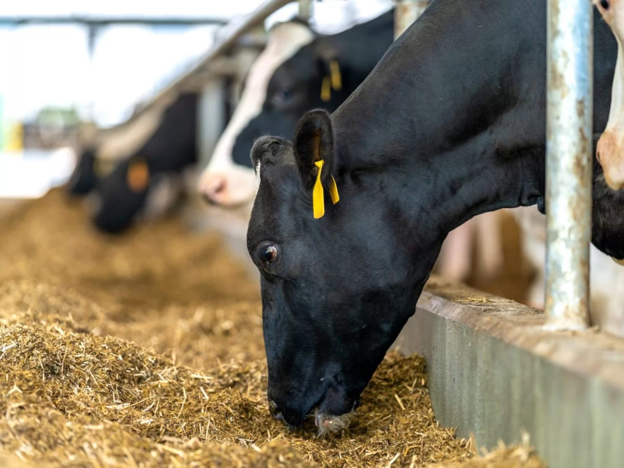
Oral feeding remains the preferred method because it maintains the normal function and integrity of the entire alimentary system while supporting rumen fermentation and microbial activity. It is also the least stressful, least labor-intensive, and most economical feeding option.
Forage remains attractive to many compromised ruminants, and fresh grass is often one of the last feeds to be refused. However, the ideal diet should generally be one that the animal is already accustomed to, allowing rumen microorganisms to continue functioning efficiently without requiring major dietary adaptation.
To encourage voluntary intake, practical adjustments may include:
- Improving feed accessibility.
- Offering finely chopped or moistened feed where chewing or swallowing is painful.
- Increasing palatability without dramatically changing the diet.
- Providing fresh feed frequently while removing refusals daily.
- Ensuring adequate feeding space and minimizing competition in hospital groups.
If the animal refuses voluntary intake despite these measures, alternative feeding routes should be considered1,4,5.
When Enteral Feeding Becomes the Better Option
Enteral feeding should be considered when voluntary intake is insufficient but much of the gastrointestinal tract remains functional. This route includes ruminal feeding through oro-ruminal tubing or rumenostomy and allows nutrients to continue stimulating rumen microbes and maintaining gastrointestinal integrity.
Compared with parenteral nutrition, enteral feeding offers several important advantages. It preserves rumen microbial populations, maintains gut-associated lymphoid tissue (GALT), minimizes intestinal permeability, and supports the physiological function of a major portion of the alimentary tract. Early enteral nutrition may also attenuate the hypermetabolic response associated with injury.
Enteral feeding is particularly useful when oral intake is limited by conditions affecting prehension, mastication, or swallowing, provided the distal gastrointestinal tract remains functional. Feed consistency can be modified by blending, grinding, or moistening diets to facilitate delivery while maintaining nutritional quality1,4,6,7.
When is Parenteral Nutrition Appropriate?
Parenteral nutrition should be reserved for situations where oral and enteral feeding are not possible or cannot adequately meet nutritional requirements. Indications include complete absence of dietary intake, severe dysfunction or loss of gastrointestinal patency, significant dehydration, severe metabolic disorders such as hepatic lipidosis or pregnancy toxemia, and marked hemodynamic compromise.
Its principal advantage is the ability to rapidly provide nutrients while simultaneously correcting fluid, electrolyte, acid-base, and metabolic disturbances when gastrointestinal feeding cannot be safely performed.
However, parenteral nutrition has important limitations. It does not support rumen function, cannot provide roughage, requires specialized equipment and intensive monitoring, and carries greater risks of fluid overload, catheter-associated infection, thrombophlebitis, liver disorders, and refeeding syndrome. Consequently, parenteral nutrition should generally serve as a temporary measure until oral or enteral feeding can be safely reintroduced. In neonatal ruminants, parenteral nutrition may initially be necessary but should be supported or gradually replaced by oral or enteral feeding as soon as clinically feasible8,9.
Choosing the Right Route for Each Patient
Selecting the feeding route should never rely on a single factor. The decision should incorporate:
- Severity and duration of illness.
- Appetite and voluntary feed intake.
- Functionality and integrity of the alimentary tract.
- Age and physiological status of the patient.
- Availability of equipment and nutritional resources.
- Financial and practical considerations.
- Expected duration of nutritional support.
Because clinical conditions often change during recovery, the feeding strategy should be reassessed regularly, with progression toward more physiological routes whenever possible.
Practical Clinical Insights
The best feeding route is the one that safely delivers adequate nutrition while preserving gastrointestinal function. Oral feeding should remain the first option whenever voluntary intake can be maintained. When this is no longer sufficient, enteral nutrition provides an effective means of supporting rumen microbial activity and maintaining gastrointestinal integrity. Parenteral nutrition remains an important option for carefully selected patients but should generally be viewed as a temporary bridge until gastrointestinal feeding can resume. Individualizing the feeding route according to the patient's clinical condition helps optimize nutritional support while complementing the overall management of compromised ruminants.
References
- Teixeira Rodrigues de Almeida S, Caetano M, Kirkwood RN, Petrovski KR. The Basics of Clinical Nutrition for Compromised Ruminants—A Narrative Review. Ruminants. 2025 Oct 23;5(4):51. https://www.mdpi.com/2673-933X/5/4/51
- Liu K, Zhang Y, Yu Z, Xu Q, Zheng N, Zhao S, Huang G, Wang J. Ruminal microbiota–host interaction and its effect on nutrient metabolism. Animal Nutrition. 2021 Mar 1;7(1):49-55. https://www.sciencedirect.com/science/article/pii/S2405654520301220
- Qiu Q, Gao C, Su H, Cao B. Rumen fermentation characteristics require more time to stabilize when diet shifts. Animals. 2021 Jul 23;11(8):2192. https://www.mdpi.com/2076-2615/11/8/2192
- Petrovski KR, Cusack P, Malmo J, Cockcroft P. The value of ‘cow signs’ in the assessment of the quality of nutrition on dairy farms. Animals. 2022 May 25;12(11):1352. https://www.mdpi.com/2076-2615/12/11/1352
- Lean IJ, Golder HM, Hall MB. Feeding, evaluating, and controlling rumen function. Veterinary Clinics: Food Animal Practice. 2014 Nov 1;30(3):539-75. https://www.researchgate.net/profile/Ian-Lean/publication/265909298_Feeding_Evaluating_and_Controlling_Rumen_Function/links/5b8f7dbd299bf114b7f62308/Feeding-Evaluating-and-Controlling-Rumen-Function.pdf
- Shakespeare AS. Rumen management during aphagia. Journal of the South African Veterinary Association. 2008;79(3):106-12. https://www.scielo.org.za/pdf/jsava/v79n3/01.pdf
- Luethy D, Stefanovski D, Sweeney RW. Refeeding syndrome in small ruminants receiving parenteral nutrition. Journal of veterinary internal medicine. 2020 Jul 1;34(4):1674-9. https://academic.oup.com/jvim/article-pdf/34/4/1674/66660907/jvim15840.pdf
- Carr EA. Enteral/parenteral nutrition in foals and adult horses practical guidelines for the practitioner. Veterinary Clinics: Equine Practice. 2018 Apr 1;34(1):169-80. https://www.academia.edu/download/63358511/Enteral_Parenteral_Nutrition_in_Foals_and_Adult_Horses_Practical_Guidelines_for_the_Practitioner20200519-78828-1r1aykd.pdf
- Doley J. Enteral nutrition overview. Nutrients. 2022 May 24;14(11):2180. https://www.mdpi.com/2072-6643/14/11/2180
Related Contents

Article
FGF-23 in Feline CKD: An Early Signal of Phosphate Dysregulation
A cat with early chronic kidney disease (CKD) may have a normal serum phosphate concentration. Does...

Article
Albuminuria or Transferrinuria? Reading the Glomerular Signal in Feline CKD
A cat can have chronic kidney disease (CKD) with only mild proteinuria. So, when urinary protein is...
Article
Tubular Injury Biomarkers in Feline CKD: What Can NGAL, KIM-1 and L-FABP Tell You?
When feline CKD is already suspected, identifying reduced renal function is only part of the clinica...
Article
Can Renal Fibrosis Biomarkers Reveal CKD Progression in Cats?
Chronic kidney disease in cats is not only a problem of declining renal function. Structural changes...
Article
When Creatinine May Not Tell the Full Story in Feline Acute Kidney Injury
Serum creatinine is routinely used with changes in urine output to diagnose and grade Acute Kidney I...
Article
When a Normal-Looking Udder Hides Mastitis: Recognising Subclinical Mastitis in Buffaloes
A buffalo can appear clinically normal while mastitis is already affecting the udder and milk produc...
Article
Buffalo Subclinical Mastitis: Which Risk Factors Should Vets Investigate?
When subclinical mastitis (SCM) keeps appearing in a buffalo herd, looking only at the affected anim...
Article
Diagnosing Subclinical Mastitis in Buffaloes: From SCC and CMT to Molecular Tests
Subclinical mastitis (SCM) can remain hidden because the buffalo may show no obvious udder or milk a...