Article
Why Horses Develop Gastric Ulcers: Diet, Stress, and Exercise Explained
Understanding why gastric ulcers develop is fundamental to effective prevention. While both ESGD and EGGD fall under the umbrella of EGUS, the mechanisms responsible for their development differ considerably.
Acid Exposure and ESGD
The squamous region of the equine stomach lacks the protective mechanisms found in the glandular mucosa. Exposure to hydrochloric acid and volatile fatty acids can compromise tissue integrity, ultimately leading to ulceration1.
High-concentrate diets increase volatile fatty acid production and have been directly linked to ulcer formation1.
Why Forage Matters
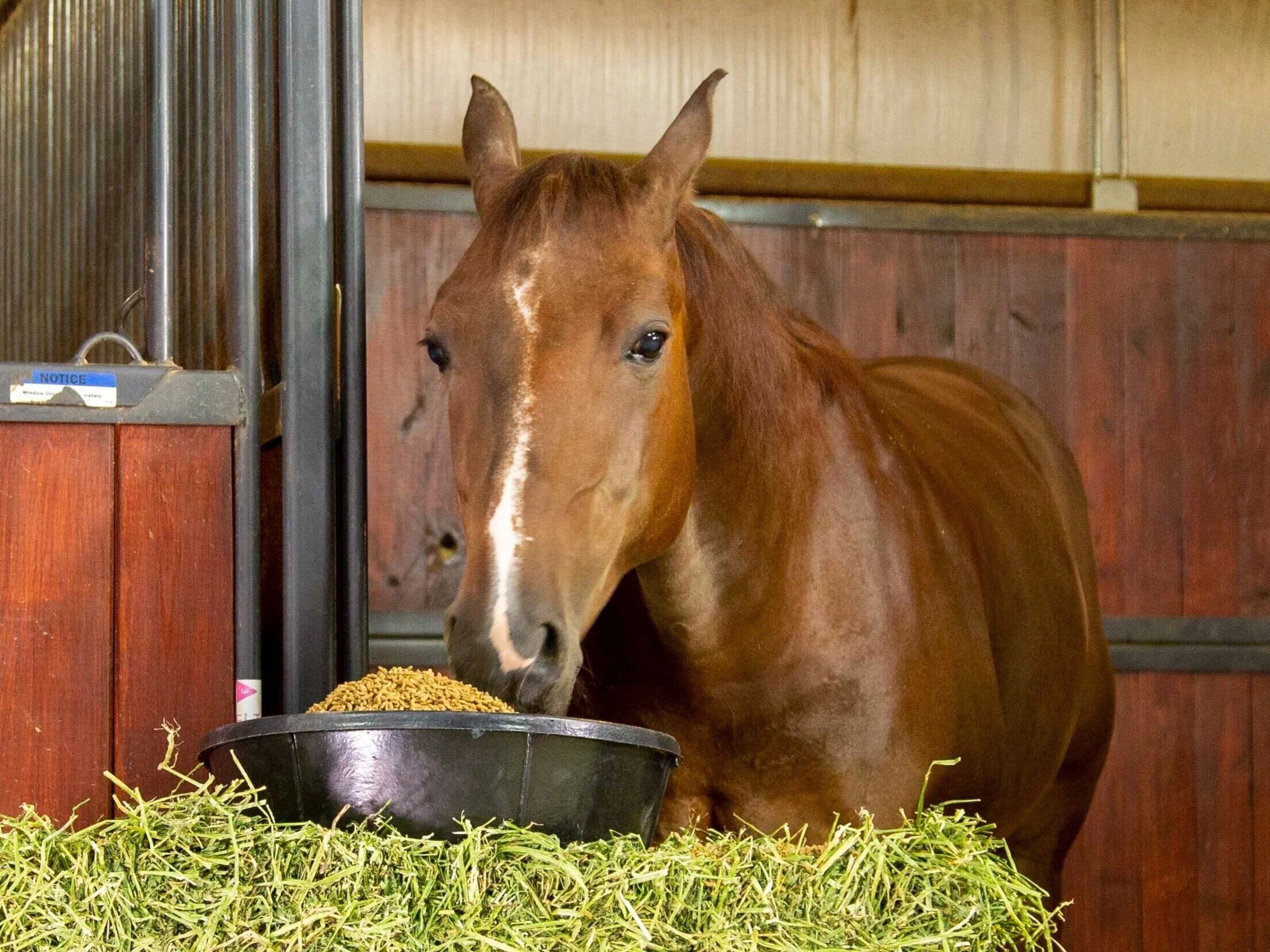
Continuous forage intake plays a critical protective role. Horses fed roughage produce approximately twice as much saliva as horses consuming concentrate feeds. Saliva acts as a natural buffer against gastric acidity1.
Periods of forage deprivation exceeding six hours significantly increase the risk of ESGD. Horses consuming insufficient roughage are more likely to develop ulcers2.
The Impact of Exercise
Exercise is a major contributor to ESGD. During trot and gallop, intragastric pressure increases substantially, causing acidic gastric contents to splash onto the unprotected squamous mucosa.
Experimental studies successfully induced squamous ulcers through race-training simulations alone1. This helps explain why racing and endurance horses consistently show the highest ulcer prevalence.
Stress and Gastric Disease
Stress is increasingly recognized as a contributing factor, particularly in EGGD. Horses with severe glandular disease often demonstrate heightened stress responses and behavioural abnormalities1.
Management factors such as multiple caretakers, environmental changes, transport, and training intensity may contribute to stress-associated gastric disease3.
NSAIDs and Glandular Ulcers
Unlike ESGD, EGGD is thought to result primarily from compromised mucosal defence mechanisms rather than direct acid injury4.
Non-steroidal anti-inflammatory drugs (NSAIDs), particularly phenylbutazone and flunixin meglumine, can impair mucosal blood flow and contribute to glandular ulcer formation1.
Conclusion
Dietary management, forage availability, exercise intensity, stress, and medication use all contribute to gastric ulcer development. Recognizing these risk factors enables veterinarians and horse owners to implement preventive strategies before clinical disease develops.
References
- van den Boom R. Equine gastric ulcer syndrome in adult horses. The Veterinary Journal. 2022 May 1;283:105830. https://doi.org/10.1016/j.tvjl.2022.105830
- Galinelli N, Wambacq W, Broeckx BJ, Hesta M. High intake of sugars and starch, low number of meals and low roughage intake are associated with Equine Gastric Ulcer Syndrome in a Belgian cohort. Journal of Animal Physiology and Animal Nutrition. 2021 Nov;105:18-23. https://www.researchgate.net/profile/Nicolas-Galinelli/publication/336719348
- Mönki J, Hewetson M, Virtala AM. Risk factors for equine gastric glandular disease: a case-control study in a Finnish referral hospital population. Journal of veterinary internal medicine. 2016 Jul;30(4):1270-5. https://doi.org/10.1111/jvim.14370
Related Contents

Upcoming Event
African Swine Fever: Diagnosis and Management
African swine fever can cause severe disease and significant losses in affected pig populations.&nbs...
.jpg)
Video
Transjugular Removal of Canine Heartworms: A Clinical and Surgical Overview
Transjugular removal of canine heartworms is a specialized intervention used in selected dogs with s...

Article
Feline Pregnancy Endocrinology: Hormonal Changes and Placental Function
Pregnancy in cats involves a distinctive endocrine pattern in which ovarian and placental hormones w...

Article
Hormonal Control of Pregnancy Termination in Cats
Pregnancy maintenance in cats depends strongly on coordinated hormonal support, particularly progest...

Article
Feline Embryo Implantation and Early Placental Development
Pregnancy establishment in cats involves a sequence of precisely timed events between fertilization,...

Article
Ultrasonographic Monitoring of Pregnancy in Cats: A Gestational Timeline
Ultrasonography provides a practical way to follow the progression of feline pregnancy by identifyin...

Article
Feline Mismating: Pregnancy Diagnosis and Clinical Management
Mismating or unplanned mating is a common clinical problem in sexually mature queen cats because of...

Article
Medical Termination of Pregnancy in Queens: Drugs, Timing and Treatment Protocols
Medical termination of pregnancy (MTP) in queen cats should be approached according to the timing of...