Article
HbA1c in the Diagnosis of Canine Diabetes Mellitus
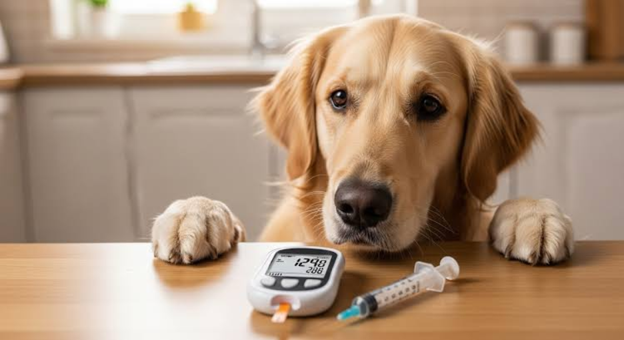
Diagnosing canine diabetes mellitus (DM) requires more than identifying hyperglycaemia during a single consultation. Blood glucose concentrations can fluctuate, making it important to use biomarkers that reflect longer-term glycaemic status. Glycated haemoglobin (HbA1c) offers this advantage by providing an estimate of average blood glucose concentrations over the preceding two to three months, making it a valuable adjunct during the diagnostic work-up1.
Understanding how HbA1c behaves in dogs and how it should be interpreted alongside clinical findings can help veterinarians improve diagnostic confidence, particularly when evaluating patients with suspected diabetes mellitus.
Understanding What HbA1c Represents
HbA1c is formed through the irreversible, non-enzymatic, insulin-independent binding of glucose to haemoglobin A. Because erythrocyte glycosylation occurs continuously throughout the lifespan of circulating red blood cells, HbA1c reflects the average blood glucose concentration over approximately two to three months in dogs1,2.
Unlike blood glucose measurements that provide only a single time-point assessment, HbA1c offers insight into sustained glycaemic exposure. Acute increases in blood glucose associated with stress, including catecholamine- or corticosteroid-mediated hyperglycaemia, do not influence HbA1c concentrations1.
Integrating HbA1c into the Diagnostic Approach
The diagnosis of canine DM continues to rely on compatible clinical history together with persistent fasting hyperglycaemia and glycosuria. Typical clinical findings include:
- Polyuria
- Polydipsia
- Polyphagia
- Weight loss
These findings, combined with persistent fasting serum glucose concentrations above 6.1 mmol/L and glycosuria, form the basis for diagnosing DM1.
HbA1c provides an additional objective measure that reflects chronic glycaemic status rather than transient glucose elevations, making it a useful complement during clinical evaluation.
Interpreting HbA1c Results in Practice
Distinct differences in HbA1c values were observed between diabetic and non-diabetic dogs. Dogs diagnosed with DM had substantially higher HbA1c concentrations than dogs with hyperadrenocorticism, dogs receiving long-term corticosteroid therapy, and dogs with various chronic diseases.
All diabetic dogs had HbA1c concentrations above both the upper reference limit of 2.7% and the previously established diagnostic cut-off of 3.3%1,2. In contrast, only two non-diabetic dogs had HbA1c values above the reference interval, and both remained below the diagnostic cut-off. These dogs had mild hyperglycaemia and were diagnosed with hyperadrenocorticism and hepatosplenic lymphoma, respectively. Follow-up information was unavailable, preventing assessment of subsequent glycaemic progression.
HbA1c also demonstrated a significant positive correlation with serum glucose concentrations. This relationship became even stronger when only hyperglycaemic dogs were evaluated, supporting the clinical relevance of HbA1c as an indicator of sustained hyperglycaemia.
Importantly, haemoglobin concentration did not significantly influence HbA1c values within the evaluated population, and no significant correlation was observed between HbA1c and haemoglobin concentration1,3.
Practical Clinical Insights
For veterinarians evaluating dogs with suspected diabetes mellitus, HbA1c can strengthen diagnostic confidence by providing evidence of prolonged hyperglycaemia rather than relying solely on a single glucose measurement.
Clinical application may include:
- Supporting the diagnosis when clinical signs are compatible with DM.
- Differentiating persistent hyperglycaemia from temporary glucose elevations.
- Interpreting glycaemic status over the previous two to three months.
- Complementing routine clinical assessment, fasting blood glucose, and urinalysis.
The presence of HbA1c values between the upper reference limit (2.7%) and the proposed diagnostic cut-off (3.3%) should be interpreted carefully. Although such values have previously been suggested to represent a possible "grey zone," their clinical significance in dogs remains uncertain and requires further clarification1.
Conclusion
HbA1c provides a practical assessment of long-term glycaemic exposure that complements conventional diagnostic findings in canine diabetes mellitus. When interpreted alongside clinical history, fasting hyperglycaemia, and glycosuria, it offers valuable information about sustained glucose control. The clear separation of HbA1c values between diabetic dogs and dogs with other chronic conditions highlights its usefulness as part of a comprehensive diagnostic approach while reinforcing the importance of interpreting results within the overall clinical context.
Reference
1. Oikonomidis IL, Tsouloufi TK, Tzenetidou Z, Ceron JJ, Tvarijonaviciute A, Konstantinidis AO, Soubasis N. Diagnostic performance of glycated haemoglobin (HbA1c) for diabetes mellitus in dogs. The Veterinary Journal. 2023 Apr 1;294:105958. https://papers.ssrn.com/sol3/Delivery.cfm?abstractid=4258878
2. Oikonomidis IL, Tsouloufi TK, Soubasis N, Kritsepi-Konstantinou M. Validation, reference intervals and overlap performance of a new commercially available automated capillary electrophoresis assay for the determination of the major fraction of glycated haemoglobin (HbA1c) in dogs. The veterinary journal. 2018 Apr 1;234:48-54. https://doi.org/10.1016/j.tvjl.2018.02.005
3. Oikonomidis IL, Tsouloufi TK, Kritsepi‐Konstantinou M, Soubasis N. Effect of anaemia and erythrocyte indices on canine glycated haemoglobin. Veterinary Record. 2021 Jun;188(11):no-. https://doi.org/10.1002/vetr.58
Related Contents

Upcoming Event
African Swine Fever: Diagnosis and Management
African swine fever can cause severe disease and significant losses in affected pig populations.&nbs...
.jpg)
Video
Transjugular Removal of Canine Heartworms: A Clinical and Surgical Overview
Transjugular removal of canine heartworms is a specialized intervention used in selected dogs with s...

Article
Feline Pregnancy Endocrinology: Hormonal Changes and Placental Function
Pregnancy in cats involves a distinctive endocrine pattern in which ovarian and placental hormones w...

Article
Hormonal Control of Pregnancy Termination in Cats
Pregnancy maintenance in cats depends strongly on coordinated hormonal support, particularly progest...
Article
Feline Embryo Implantation and Early Placental Development
Pregnancy establishment in cats involves a sequence of precisely timed events between fertilization,...

Article
Ultrasonographic Monitoring of Pregnancy in Cats: A Gestational Timeline
Ultrasonography provides a practical way to follow the progression of feline pregnancy by identifyin...

Article
Feline Mismating: Pregnancy Diagnosis and Clinical Management
Mismating or unplanned mating is a common clinical problem in sexually mature queen cats because of...

Article
Medical Termination of Pregnancy in Queens: Drugs, Timing and Treatment Protocols
Medical termination of pregnancy (MTP) in queen cats should be approached according to the timing of...